Recently, the Global Solar Council (GSC) stated in a newly released position paper that the world is at a critical crossroads in the energy transition. The rapid development of solar and ESS was expected to accelerate the decarbonisation of energy systems, but in reality, aging grid infrastructure—unchanged for a century—and outdated market rules have become the biggest bottlenecks limiting the further growth of clean energy.
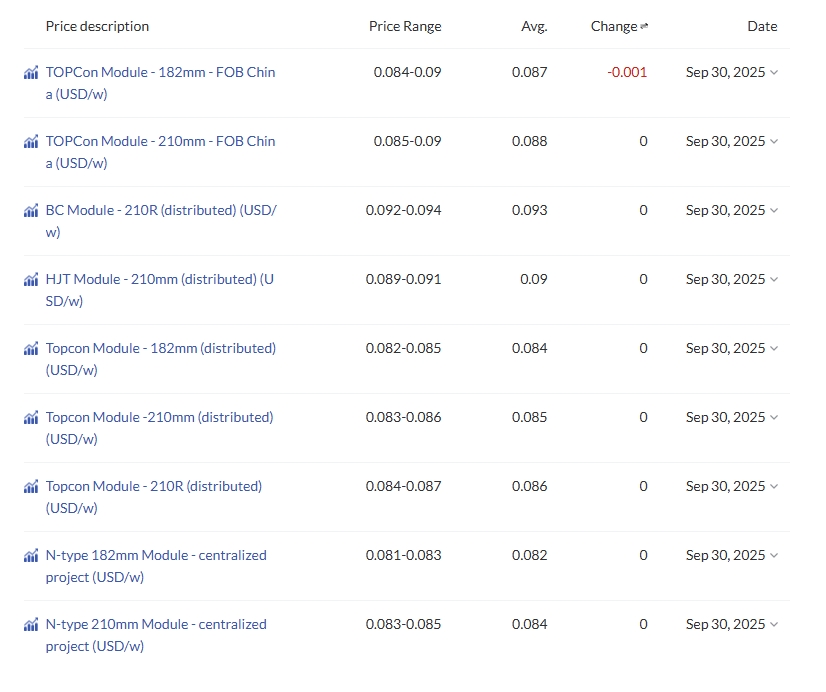
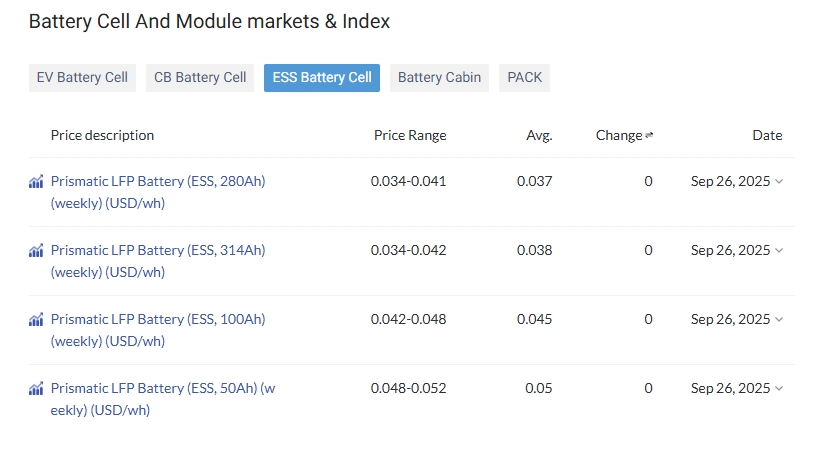
Over the past decade, the costs of PV and ESS have continued to hit bottom, making them the most competitive energy technologies.In the Chinese market, PV module prices have fallen to around 0.09 USD/W, while ESS battery prices have also gradually approached 0.04 USD/Wh.
SMM PV Module Price
SMM ESS Battery Price
However, technological maturity does not guarantee smooth implementation. In Europe, electricity prices during midday hours—when PV output is concentrated—have repeatedly dropped into negative territory, compressing investment returns. In Asia, grid congestion and curtailment of PV power generation have become commonplace, with many newly built power plants in markets such as Japan and Vietnam unable to connect to the power grid. At the same time, while the digitization and intelligentization of the power grid have brought higher efficiency, they have also introduced new risks—cybersecurity threats such as hacking and system vulnerabilities are posing fresh challenges to the stability of power systems.
The GSC emphasized in the document that the combination of PV and ESS is increasingly demonstrating its role as a "game-changer." Short-duration batteries can shift excess midday electricity to evening peak hours, not only alleviating the notorious "duck curve" but also enhancing grid flexibility and reliability. Globally, multiple cases illustrate this trend. Sabah, Malaysia, is constructing a 400 MWh ESS project to strengthen its fragile grid; Uruguay has nearly achieved 100% renewable energy supply through cross-border interconnections and strategic investments; and in Nigeria, distributed PV+ESS systems are gradually replacing tens of millions of diesel generators, providing more economical and cleaner energy for residents and enterprises.
These cases are not merely demonstrations of technological application but also microcosms of changes in the energy landscape. As PV and ESS take center stage in global power systems, the traditional grid model—reliant on centralized power plants and top-down dispatch—is being redefined. The GSC specifically pointed out that future grids must become more decentralized, digitalized, and gradually evolve toward bottom-up energy flows. In this process, ESS is no longer a supplementary role but a key pillar for maintaining the stability of new-type power systems.
The document ultimately concludes that those who lead in promoting grid upgrades and market reforms will gain a competitive edge in the future energy landscape. This is not only about the installed capacity of clean energy but also concerns energy security, price stability, and the overall competitiveness of the industry chain. In other words, the energy transition is no longer just an environmental issue but a core variable for economic growth and social stability.
The GSC noted in the document: "The combination of solar and ESS is no longer a future vision but an inevitable choice in reality." As more countries begin setting ESS targets, advancing cross-border interconnections, and experimenting with new market designs, it is expected that a more flexible, stable, and clean power system will take shape. The real challenge lies in whether this process can proceed quickly enough to meet the world's increasingly urgent energy transition needs.
The source address is:Grid&Storage Position Paper
![[SMM Analysis: China's Cobalt Intermediate Products Imports Up 107% MoM in May 2026]](https://imgqn.smm.cn/usercenter/oVqJl20251217171730.jpg)
![Impact of the Ministry of Commerce Adding 10 US Entities to the Export Control List on Solid-State Batteries [SMM Analysis]](https://imgqn.smm.cn/usercenter/olwlF20251217171731.jpg)